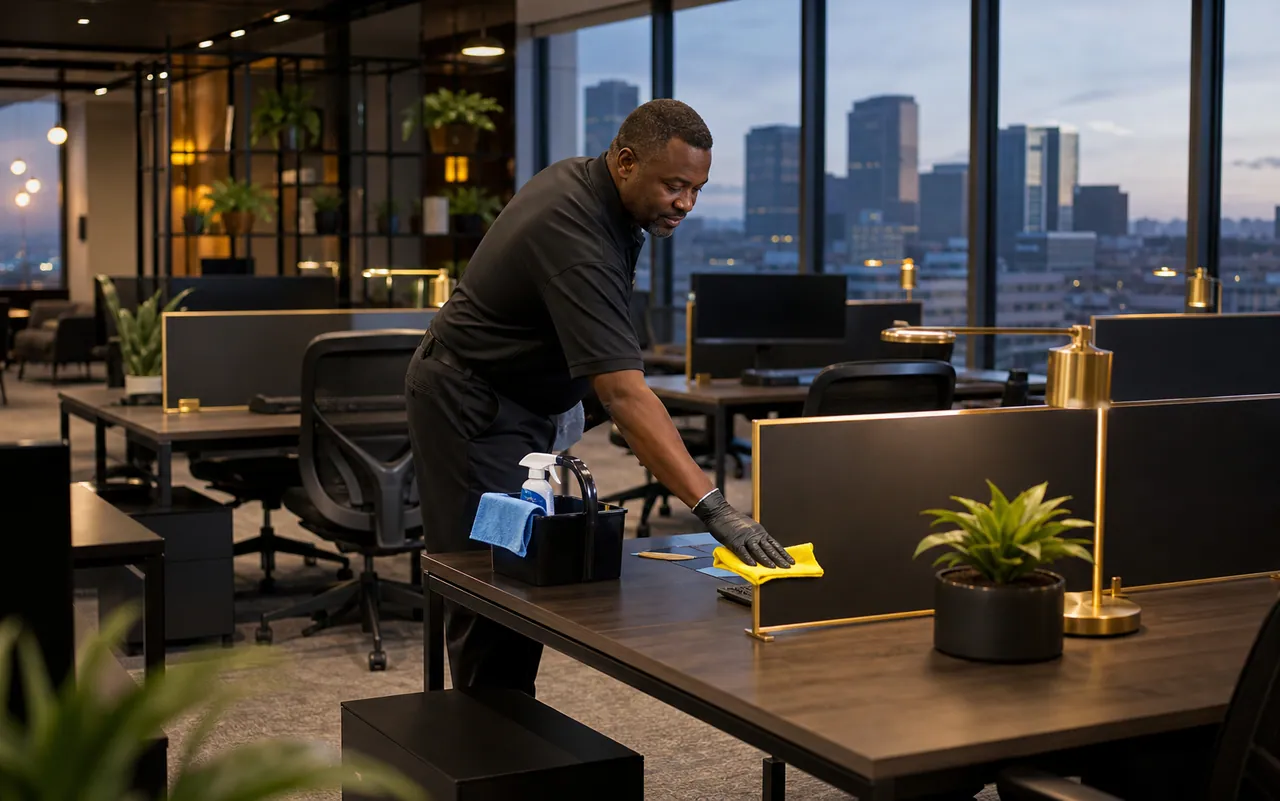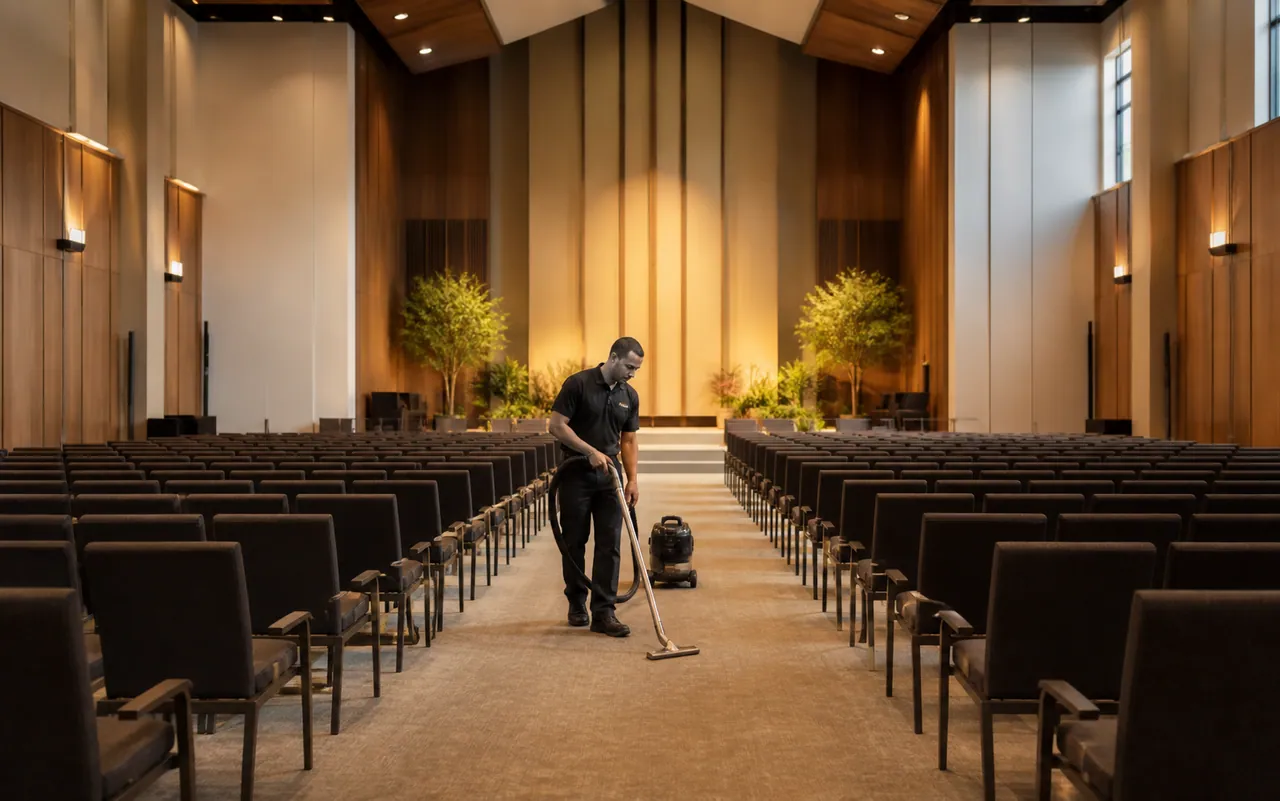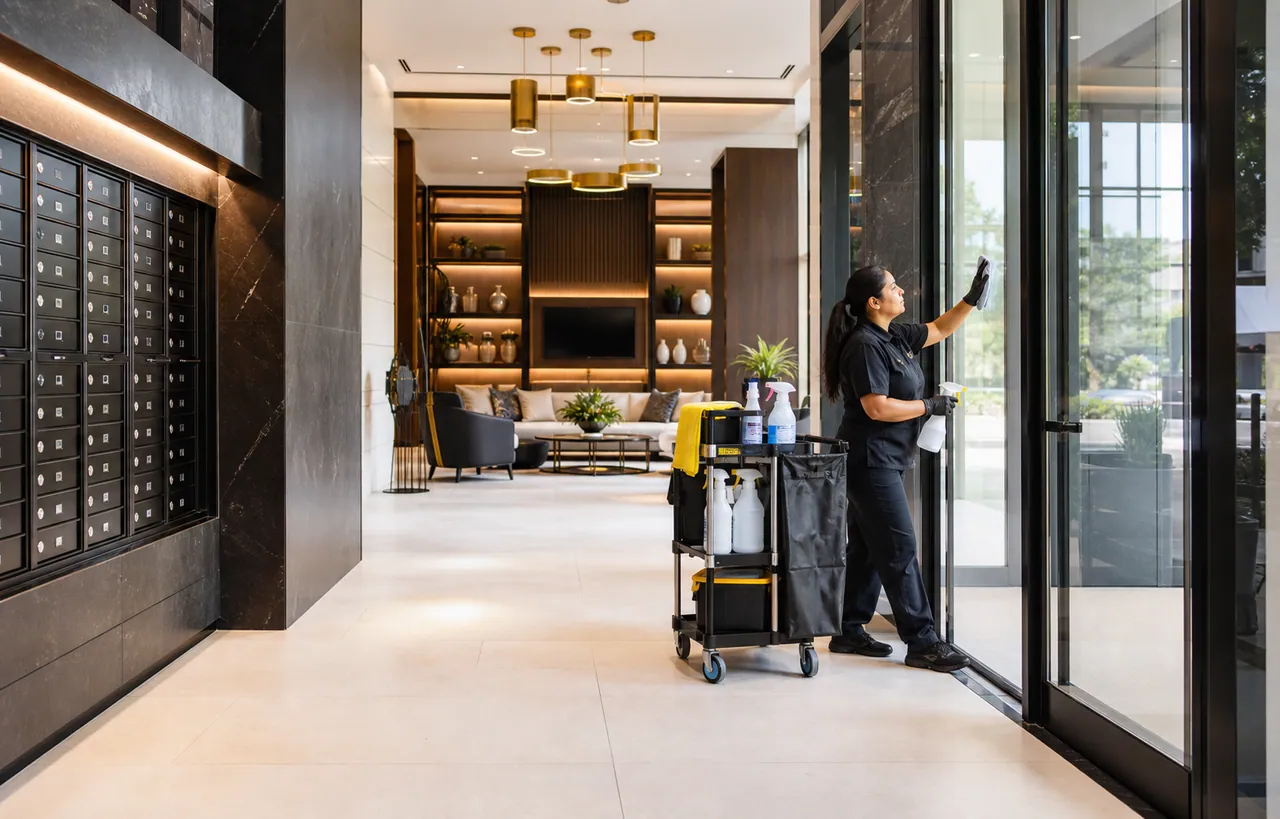
Method matched to carpet
Fiber, construction, soil level, access, and drying needs inform the recommended process.
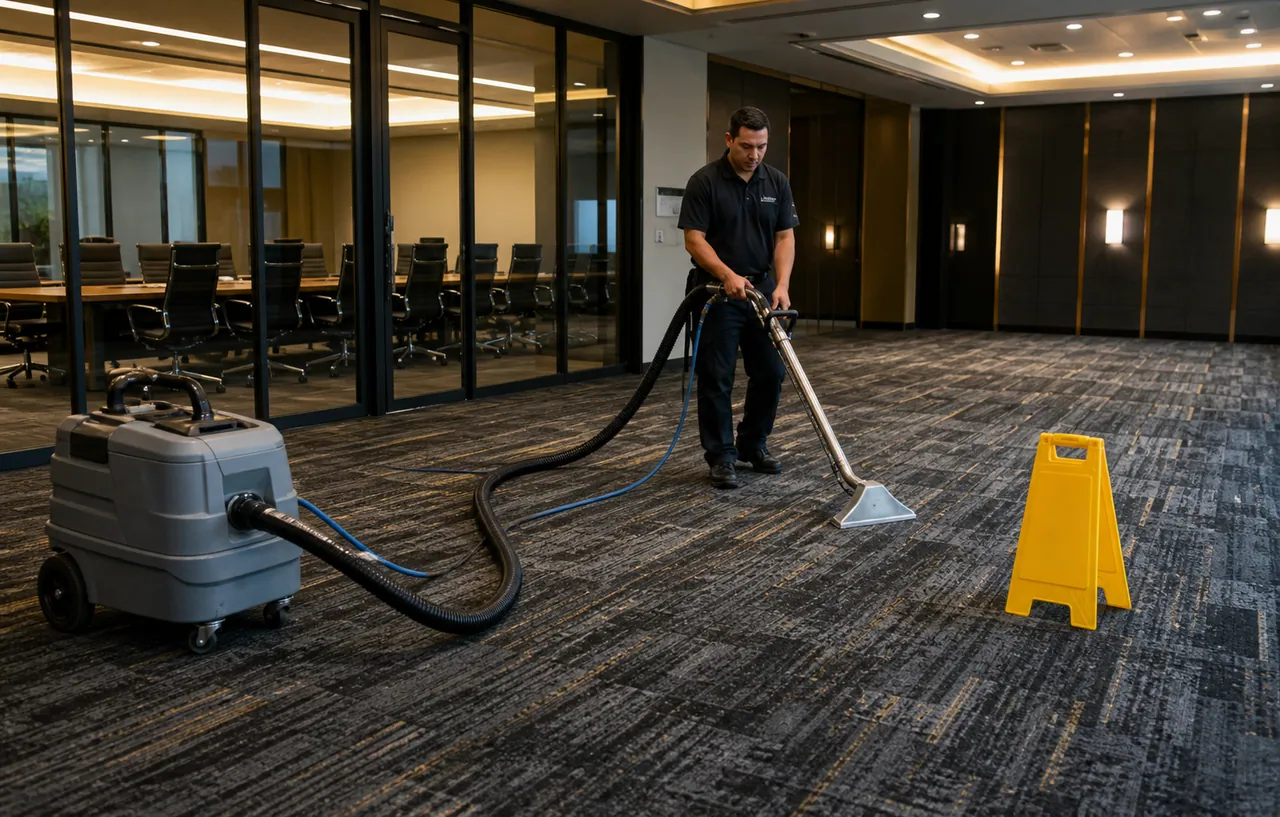
Commercial carpet care for tracked soil, spots, traffic lanes, and periodic deep cleaning in occupied or after-hours facilities.
Commercial carpet cleaning targets the soil that routine vacuuming cannot fully remove. The appropriate method depends on fiber, construction, backing, condition, spot types, traffic, drying constraints, and the time available before the area returns to service.
Entry soil, dark traffic lanes, beverage spots, food residue, odor sources, and embedded particulate can affect appearance and carpet life. Over-wetting, residue, or using the wrong chemistry can create new problems, so method selection matters.
Dallas–Fort Worth properties track in fine dust, pollen, roadway soil, and wet-weather debris. Entry areas and paths between doors, elevators, desks, and gathering spaces often need more attention than low-traffic carpet.
Fiber, construction, soil level, access, and drying needs inform the recommended process.
Entries, corridors, transitions, and frequently used routes can receive focused treatment.
Work zones, drying expectations, furniture, and occupancy are reviewed before service.
The final quote identifies the approved rooms, surfaces, tasks, frequency, service window, and responsibilities. Items outside that scope can be discussed before they are added.
Discuss My FacilityPreparation is different for every facility. Access, furniture, traffic, security, drying, utilities, and restricted areas are clarified during the estimate process.
Review fiber, construction, stains, traffic patterns, access, colorfastness concerns, and prior damage.
Confirm furniture handling, vacuum or remove dry soil, treat approved spots, and establish work zones.
Use the selected method, manage moisture, set expectations for drying, and protect the area during return to use.
Depending on the carpet and scope, work may use commercial vacuums, spotters selected for the stain type, preconditioning solutions, agitation tools, hot-water extraction or low-moisture equipment, air movers, and fiber-safe rinsing chemistry.
Not sure whether the service fits? Share the property and problem during the estimate request. Some hazardous, regulated, or highly specialized work may require another qualified provider.
These answers set a useful starting point. The final recommendation depends on the building, surfaces, condition, access, and requested result.
Request a site-specific estimate →Drying time depends on the method, carpet construction, soil level, ventilation, humidity, and how much moisture is used. The expected range should be discussed after the carpet is evaluated.
No. Results depend on the substance, fiber, age of the spot, prior chemicals, and permanent color or fiber damage. Specific stain removal should not be guaranteed before evaluation.
The area being cleaned should be controlled, but the entire facility may not need to close. Work zones and return-to-use timing are planned around access and safety.
Frequency varies by traffic, entry protection, vacuuming, appearance standards, spills, and manufacturer guidance. High-traffic lanes may need attention more often than enclosed rooms.
Routine cleaning, carpet care, hard-floor maintenance, and building-specific service often work together. Explore the related options below.
Share the property, service, schedule, and problem areas. We'll help identify the next useful step.