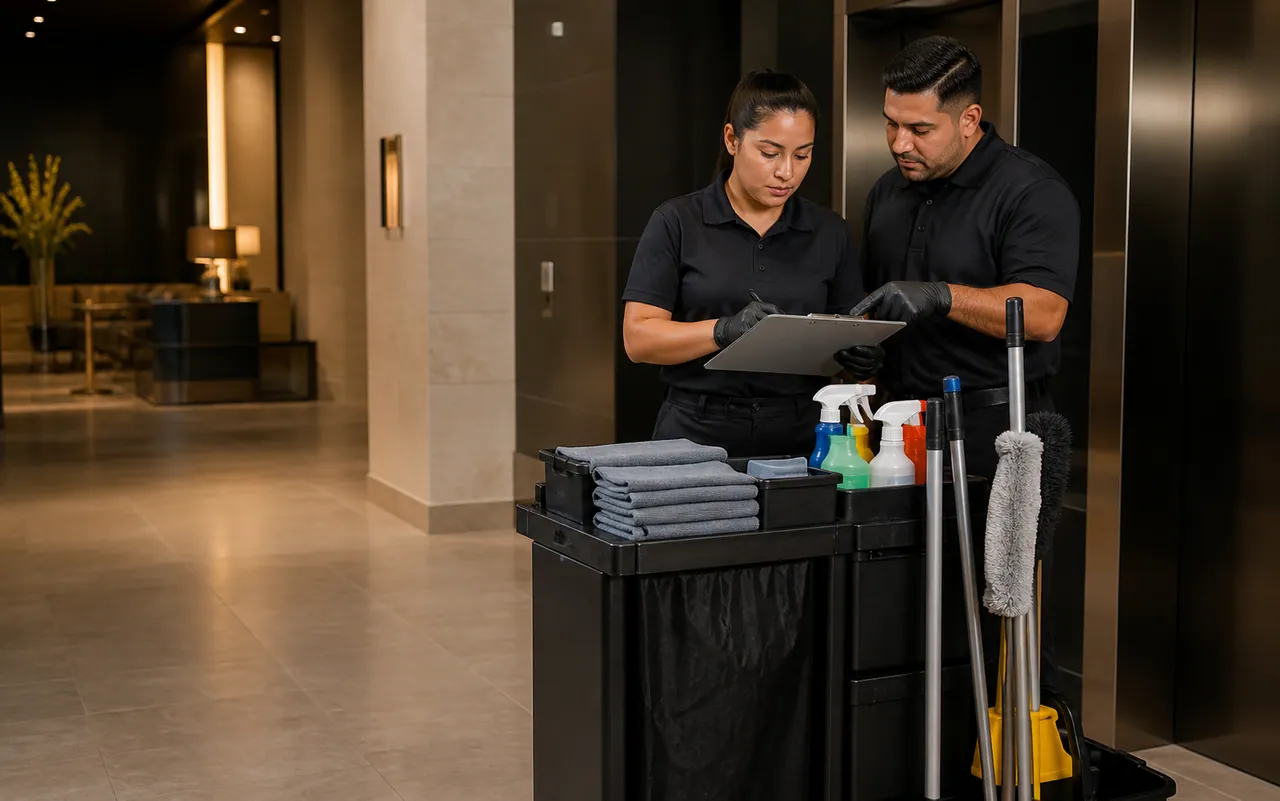
Zone-based planning
Office, employee, dock, aisle, and restricted areas can receive different tasks and frequencies.
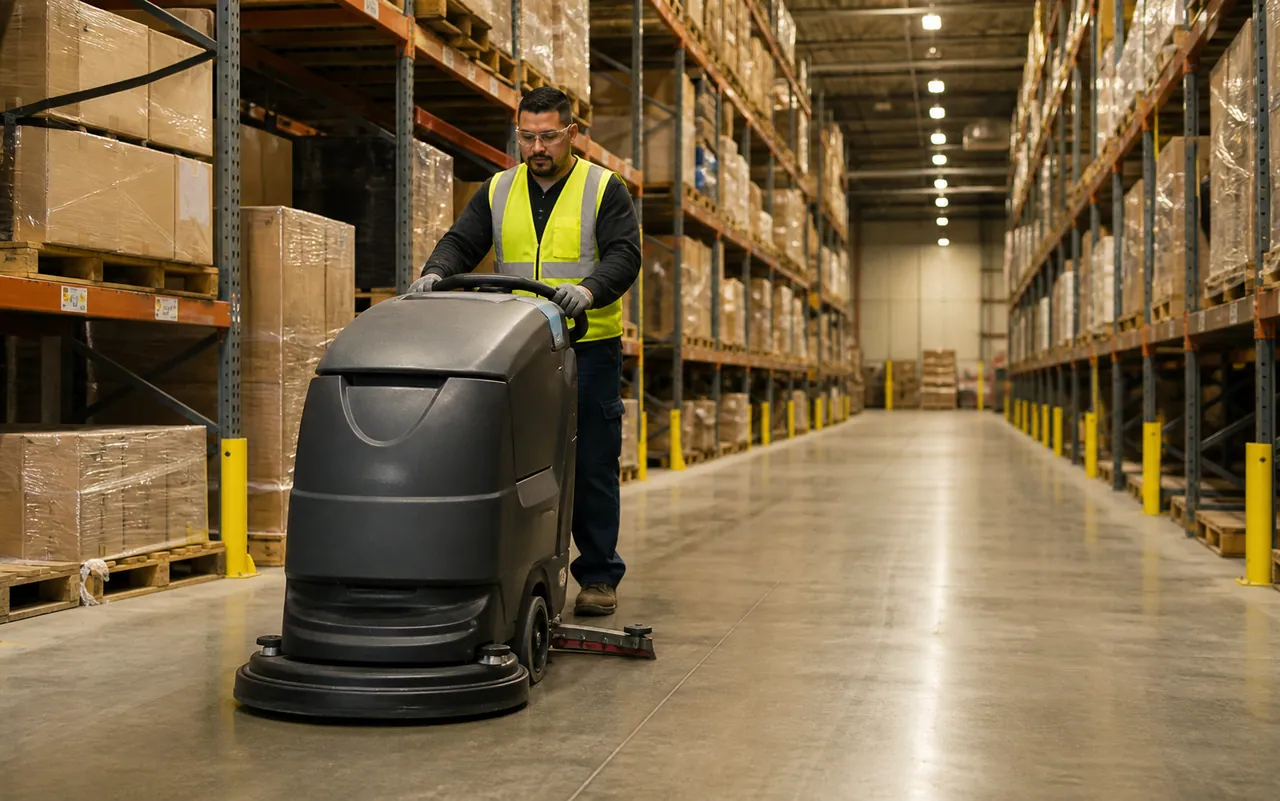
Safety-aware cleaning for warehouses and light industrial facilities, from front offices and restrooms to wide concrete aisles and high-traffic support areas.
Warehouse cleaning is shaped by movement, access, equipment, and the type of soil produced by the operation. A useful scope separates administrative areas from warehouse floors, docks, breakrooms, restrooms, and approved production-adjacent spaces.
Dust, pallet debris, tire marks, tracked soil, packaging residue, and busy travel lanes can make large facilities difficult to maintain. Cleaning also has to be coordinated around forklifts, deliveries, racking, inventory, and restricted areas.
Dallas–Fort Worth distribution sites often experience heavy vehicle traffic and rapid dust accumulation. Large concrete floors may require mechanized cleaning, while entry points, offices, and employee areas need different tools and products.
Office, employee, dock, aisle, and restricted areas can receive different tasks and frequencies.
Cleaning windows are coordinated around traffic, inventory, material handling, and site rules.
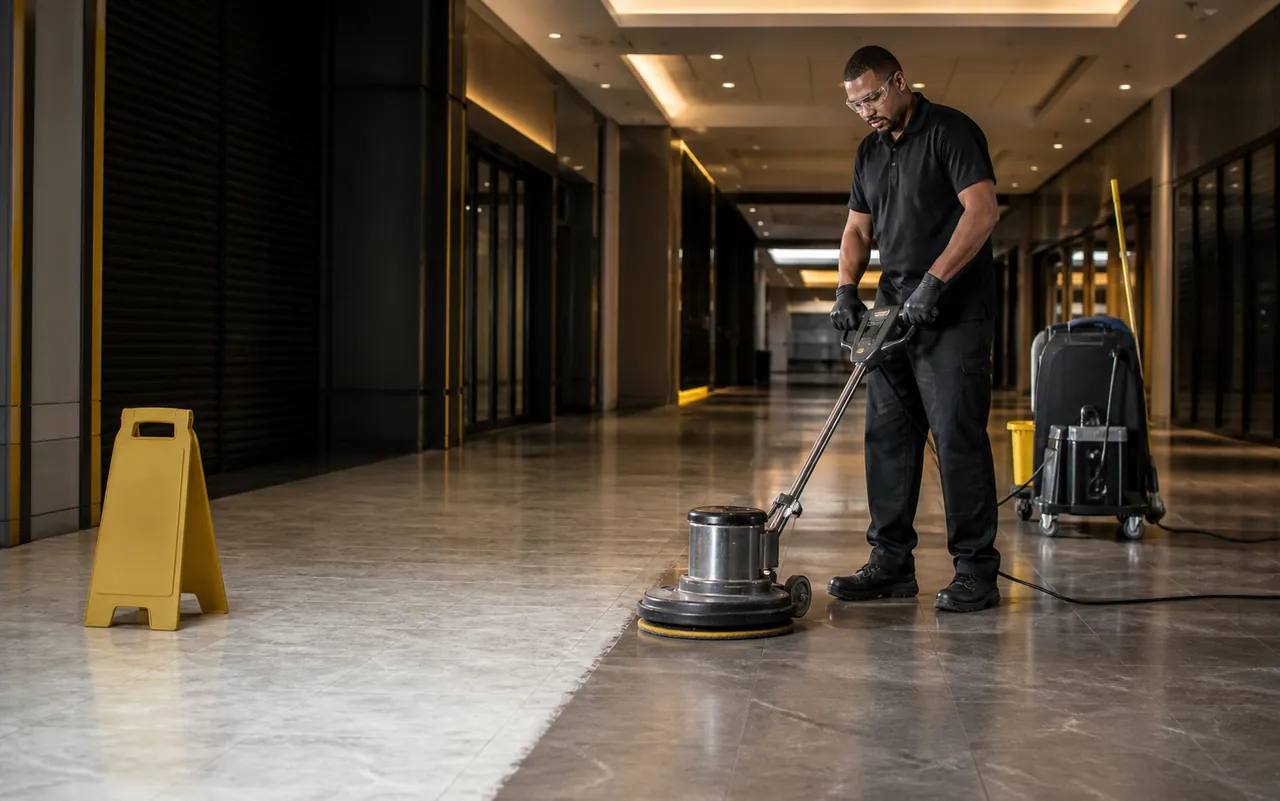
Large hard-floor areas can be evaluated for scrubbing or other appropriate machine-based care.
The final quote identifies the approved rooms, surfaces, tasks, frequency, service window, and responsibilities. Items outside that scope can be discussed before they are added.
Discuss My FacilityPreparation is different for every facility. Access, furniture, traffic, security, drying, utilities, and restricted areas are clarified during the estimate process.
Discuss site rules, traffic, restricted zones, shutdown windows, and required coordination before quoting.
Review floor material, residue type, equipment needs, drainage, and the condition of key areas.
Work zones, signage, equipment, and timing are organized to reduce conflicts with active operations.
Depending on the facility and approved scope, work may use industrial vacuums, microfiber tools, degreasers compatible with the surface and soil, neutral cleaners, automatic scrubbers, rotary equipment, wet-floor controls, and task-appropriate personal protective equipment.
Not sure whether the service fits? Share the property and problem during the estimate request. Some hazardous, regulated, or highly specialized work may require another qualified provider.
These answers set a useful starting point. The final recommendation depends on the building, surfaces, condition, access, and requested result.
Request a site-specific estimate →Sometimes. A walkthrough is used to determine whether work can be safely separated from traffic or should be scheduled during a slower period or shutdown window.
Only tasks specifically reviewed and approved in the written scope should be performed. Specialized equipment, regulated waste, hazardous residue, and environmental remediation may require qualified specialty providers.
Large floor areas can be evaluated for automatic scrubbing or other machine-based cleaning. The surface, coatings, residue, drainage, and active traffic affect the recommended method.
The estimate process should identify inventory or equipment that must be moved, active traffic that must be rerouted, restricted areas, utilities needed, and a facility contact for access.
Routine cleaning, carpet care, hard-floor maintenance, and building-specific service often work together. Explore the related options below.
Share the property, service, schedule, and problem areas. We'll help identify the next useful step.