Floor-specific method
The material and existing finish are identified before choosing pads, chemistry, or equipment.
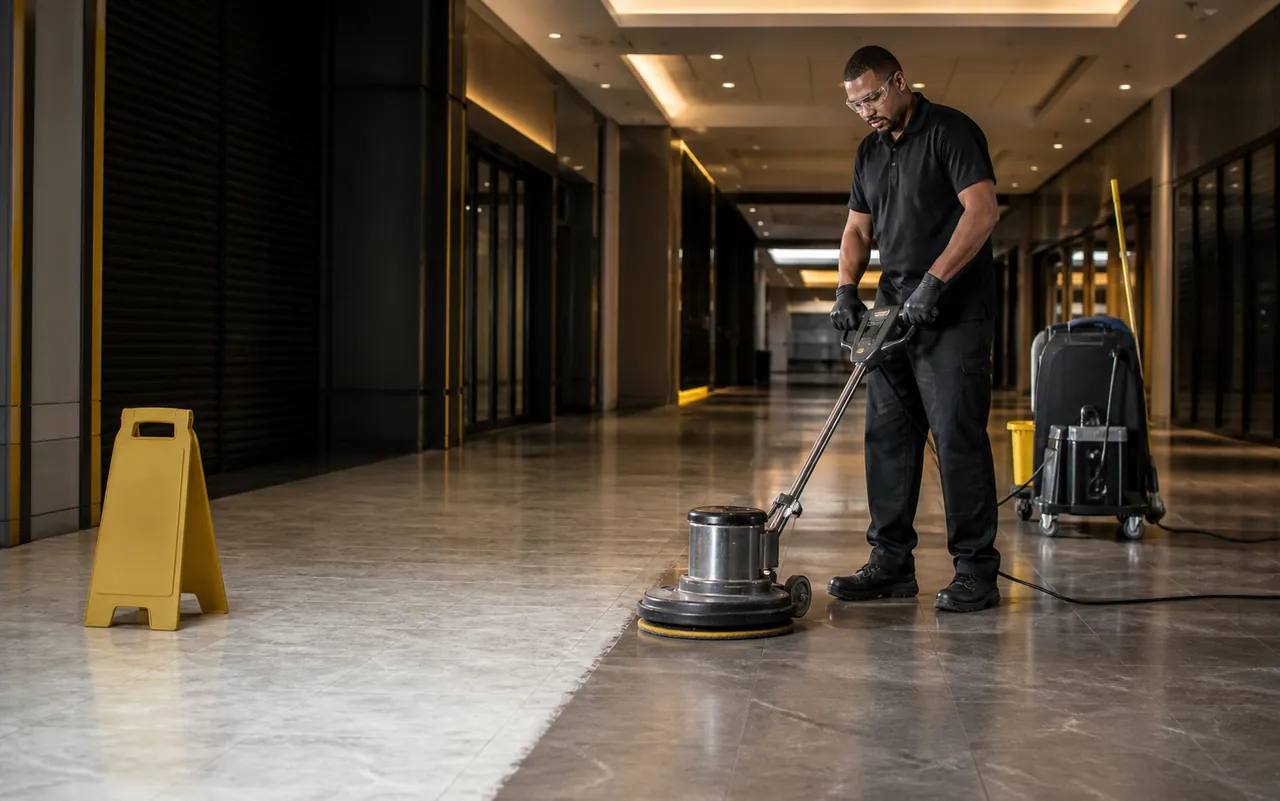
Commercial hard-floor care, including routine cleaning, machine scrubbing, and stripping or waxing for compatible resilient flooring.
Commercial floor care ranges from routine soil removal to machine scrubbing and finish restoration. The correct plan depends on the floor material, existing finish, wear, embedded soil, prior maintenance, slip concerns, equipment access, and the appearance standard.
Tracked soil, heel marks, dull traffic lanes, finish buildup, uneven gloss, residue, and worn protective coats can make floors difficult to maintain. Applying new finish over contaminated or failing layers can lock in defects rather than correct them.
North Texas dust and entry soil can act abrasively on finished floors. Rain events also increase grit and moisture at entrances, making walk-off protection, routine removal, and timely maintenance important for commercial facilities.
The material and existing finish are identified before choosing pads, chemistry, or equipment.
Access, drying, signage, ventilation, and return-to-service needs are planned in advance.
The estimate can distinguish routine cleaning from restorative stripping and refinishing.
The final quote identifies the approved rooms, surfaces, tasks, frequency, service window, and responsibilities. Items outside that scope can be discussed before they are added.
Discuss My FacilityPreparation is different for every facility. Access, furniture, traffic, security, drying, utilities, and restricted areas are clarified during the estimate process.
Confirm the flooring material, coating or finish, condition, maintenance history, and problem areas.
Establish work zones, furniture or fixture responsibilities, utilities, drying, and reopening requirements.
Perform the approved routine or restorative process, allow required drying or curing, and review maintenance needs.
Work may use neutral floor cleaners, automatic scrubbers, rotary machines, pads selected for the task, finish removers, wet vacuums, compatible sealers or floor finish, microfiber mop systems, and wet-floor controls. Products are chosen after the floor and existing finish are evaluated.
Not sure whether the service fits? Share the property and problem during the estimate request. Some hazardous, regulated, or highly specialized work may require another qualified provider.
These answers set a useful starting point. The final recommendation depends on the building, surfaces, condition, access, and requested result.
Request a site-specific estimate →No. Stripping and waxing applies to compatible floor systems with a maintainable finish. Some tile, concrete, stone, laminate, or factory-finished products require different methods.
Return-to-service time depends on the process, products, number of coats, temperature, humidity, airflow, and expected traffic. The work plan should establish access restrictions before service begins.
Cleaning and finish work cannot correct every form of permanent discoloration, substrate damage, deep scratching, or failed flooring. A condition review helps set realistic expectations.
Use compatible neutral cleaners, remove grit frequently, maintain walk-off mats, respond to spills, and avoid unapproved products that can haze or soften the finish.
Routine cleaning, carpet care, hard-floor maintenance, and building-specific service often work together. Explore the related options below.
Share the property, service, schedule, and problem areas. We'll help identify the next useful step.